Homeowners stare at the gutter. The downspout is the part that actually has to stay open when a dark roof unloads snow in March. Casper’s annual rain is low — about 13 inches — but snowmelt is a pulse. Design snow load is 30 psf. Frost depth is 3 feet. If that pulse hits a pipe full of ice, water goes sideways: over the gutter lip, behind the fascia, or straight down the siding into the skirt of the house.
This page covers 2x3 versus 3x4, how many outlets a Casper roof wants, extensions versus buried drains versus splash blocks, frozen-pipe repairs, heat cable without the hype, and price ranges. It pairs with installation and repair; a beautiful seamless trough with one undersized, frozen leader is still a failure.
Meltwater is the design load
A 5-inch or 6-inch K-style trough can hold a surprising amount of water. It still has to leave through an opening the size of a downspout. Typical residential leaders are 2x3 or 3x4 inches. In a climate where the pipe can ice from the inside, the smaller profile plugs first. We would rather see more outlets and a 3x4 on long eaves than one skinny pipe trying to drain a whole west side.
Rule of thumb used in many shops: one downspout per 30–40 feet of gutter, closer on steep roofs and on eaves that already overflow. Casper mountain-side and Paradise Valley homes with long back runs often need more, not fewer, because trees add clogs and melt is uneven from shade.
2x3 vs 3x4 (and round)
| Size | Use in Casper | Notes |
|---|---|---|
| 2x3 rectangular | Short runs, small roofs, tight corners | Freezes easier; fine as a second outlet, weak as the only pipe on a long eave |
| 3x4 rectangular | Default on larger Casper homes and 6-inch gutters | More capacity, slower to plug, looks heavier on a small ranch |
| Round | Copper or historic profiles | Works; match the gutter system rather than mixing |
Color should match the trough. Straps should hit solid wall, not foam. Offsets around soffits need screws, not friction. Wind will take a loosely clipped downspout off a Casper house — we see them in yards after March blows.
Frozen downspouts
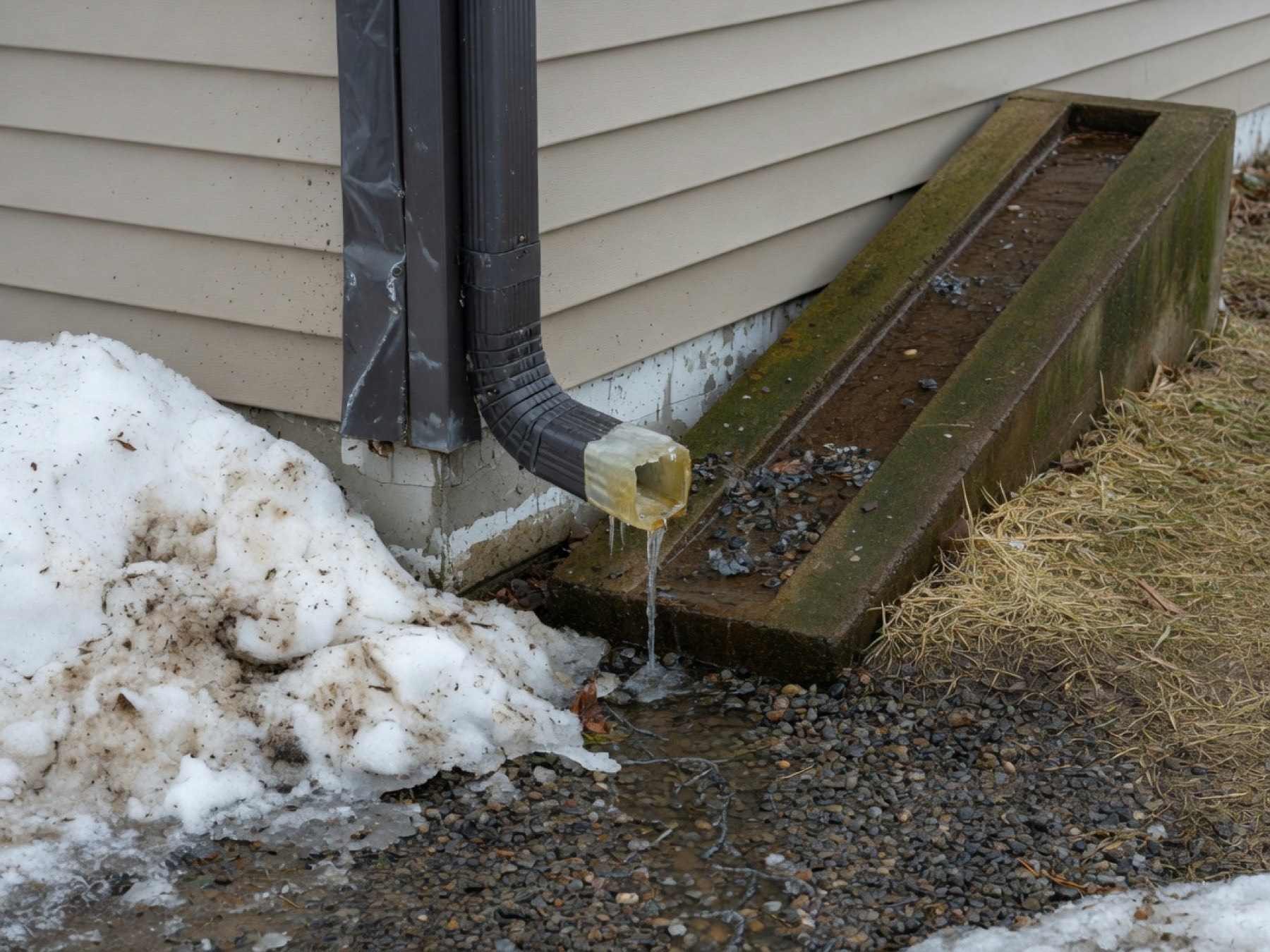
The sequence is boring and expensive if you ignore it: debris at the outlet, overnight freeze, daytime melt, ice plug, split elbow or blown seam. Homeowners describe “leaks only when it’s warming up.” That is the pipe, not a mysterious hole in the middle of the trough.
A proper fix:
- Thaw and open the pipe. Do not hammer ice inside aluminum if you can avoid it — you crease the metal and create the next split.
- Remove the debris that started the plug. That may mean a full cleaning.
- Replace split elbows and crushed sections. Once the coating is open, steel rusts; aluminum just leaks.
- Consider a larger leader or a second outlet if this corner freezes every year.
- Heat cable only if the eave has a documented ice problem after the pipe is clear. Cable in a dirty downspout cooks sludge.
Where the water should go
Splash blocks
Better than dumping on the skirt of the house. Worse than a real extension. On frozen ground they ice into a ramp back toward the foundation. Fine as a temporary on a dry lot. Not a plan for a Casper winter.
Downspout extensions (the workhorse)
Rigid or flexible pipe that carries water several feet away — often 6–10 feet on a flat lot, more if the grade falls toward the house. You want a path that does not cross the walk you salt in January. Flexible accordion pipe is ugly and it kinks; it also freezes into a sculpture. Rigid extensions or buried-but-drainable pipe are cleaner. Take them off before the mower, put them back before freeze-up. A missing extension in November is a basement in March.
Underground drains
The tidy look. Also the freeze look, if the line holds water in a 3-foot frost climate. Buried drains in Casper need slope, cleanouts, and a discharge that actually daylight or hits a pit that can take winter flow. A corrugated line dumped into a clogged drywell is how you flood a window well. We will not bury a drain on a wish. If the lot cannot daylight, say so in the estimate.
Rain barrels
A summer accessory. Disconnect before freeze. A barrel on a Casper downspout in January is an ice block and a mosquito plan in June.
Foundations, frost, and why discharge is not cosmetic
Casper frost depth is specified at 3 feet to the top of footing. Water against the foundation freeze-thaws the backfill and finds cracks. Gutters exist to keep roof water off that wall. If your “gutter problem” is a damp rim joist on the north side, look at the downspout first. Moving the discharge is cheaper than interior waterproofing, and it should be tried first when the wet spot lines up with an eave.
Straps, wind, and pull-off
A downspout is a vertical sail. One strap at the top is not enough on a two-story west wall. Fasten into structure, not just foam or old mortar. After a high-wind day, walk the house: a leader that has kicked off at the elbow will overflow the next melt even if the gutter looks perfect.
Price ranges
- Replace one downspout with elbows and straps: often $150–$350 on a one-story, more on two-story.
- Upgrade 2x3 to 3x4 on a run: typically a few hundred per location including the outlet.
- Rigid extensions: often $75–$200 each, depending on length and how they clip.
- Underground drain with cleanout: widely variable — hundreds to low thousands — because of trench, daylight, and freeze design. Get that scoped on site.
- Heat cable on a chronic eave/downspout: product plus install; treat as an add-on after cleaning and sizing, not a first step.
Per-foot gutter prices you see online sometimes include “basic downspouts.” Ask how many, what size, and where they dump. A bid that is cheap because it uses two 2x3s on a 180-foot house is not cheap.
When the downspout is trying to tell you the gutter is wrong
If every thaw overflows a clean 2x3, you may need another outlet or a 6-inch trough — that is installation work. If the pipe is fine and the trough leaks at corners, that is repair. If the pipe clogs with seed every June, look at guards and a June cleaning, not a fourth downspout in the same clogged corner.
Related reading
Seamless installation · Repair · Cleaning · Service area